On the Shoulders of Giants

Two things happened this past week that brought me to a place of deep contemplation and study.

The first is that I had a conversation with someone who sits on the board of directors for a children’s hospital. She shared with me that there are still individuals in health care and state government who believe that children with disabilities should be placed in institutions.

The other thing is that my new state-funded respite worker arrived.

The opposite nature of these two things has caused me to reflect upon my good fortune with a renewed sense of gratitude. I have been reminded, once again, that I am standing on the shoulders of giants.

From the moment we learned that the Girl in Charge was going to be disabled, we were inundated by state and local early intervention services who contacted us, eager to offer the support we needed. And after we moved, our new state offered generous services for her as well, including respite care paid for through her Medicaid Waiver. So for the past six years, I have been blessed to have a respite worker in my home several hours a day, several days a week, giving me relief so that I could attend to the needs of my other children. This program has provided the Girl in Charge with the one-on-one care she needs while at the same time saving my sanity. I simply do not know what we would do without it.

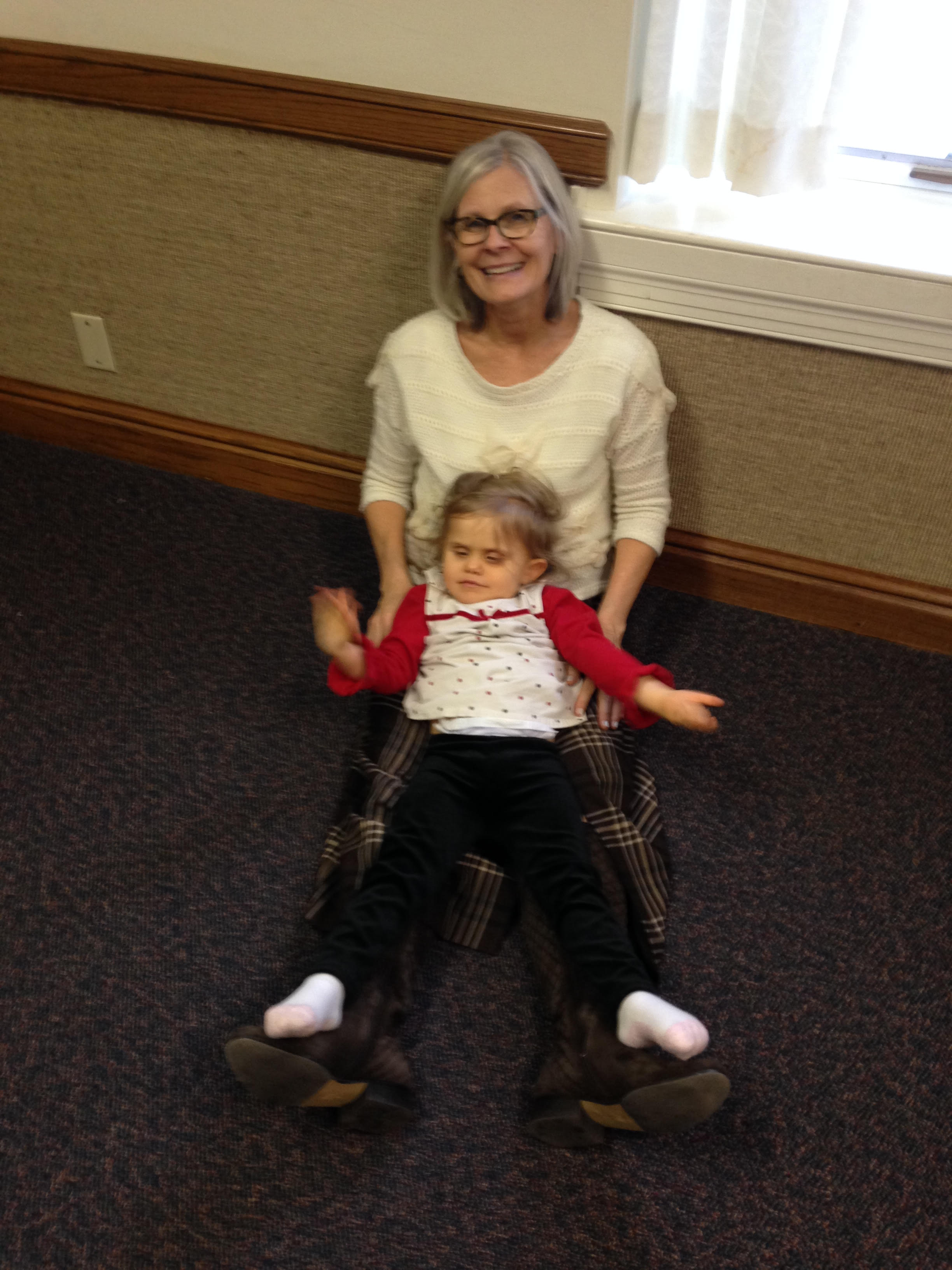
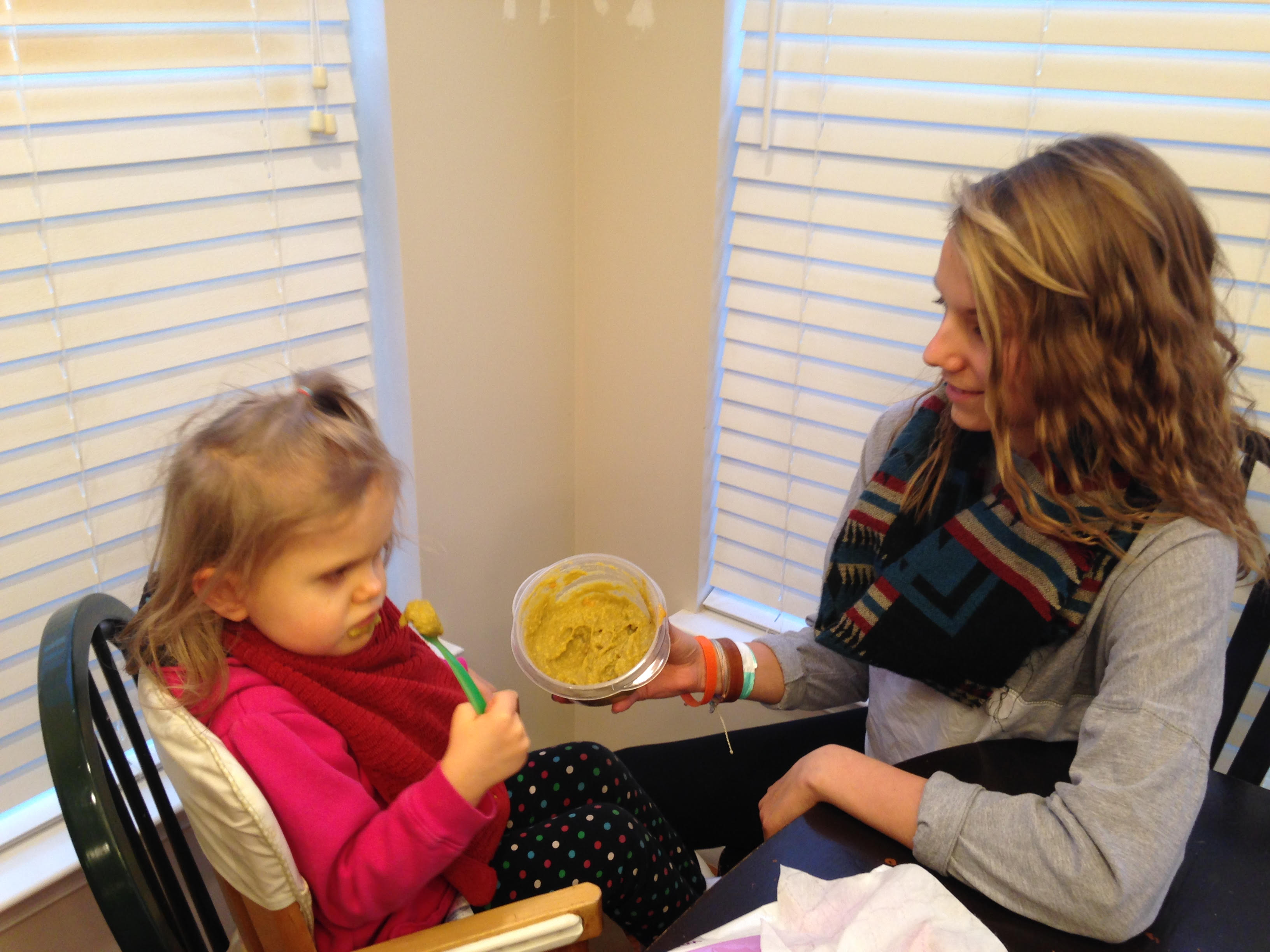
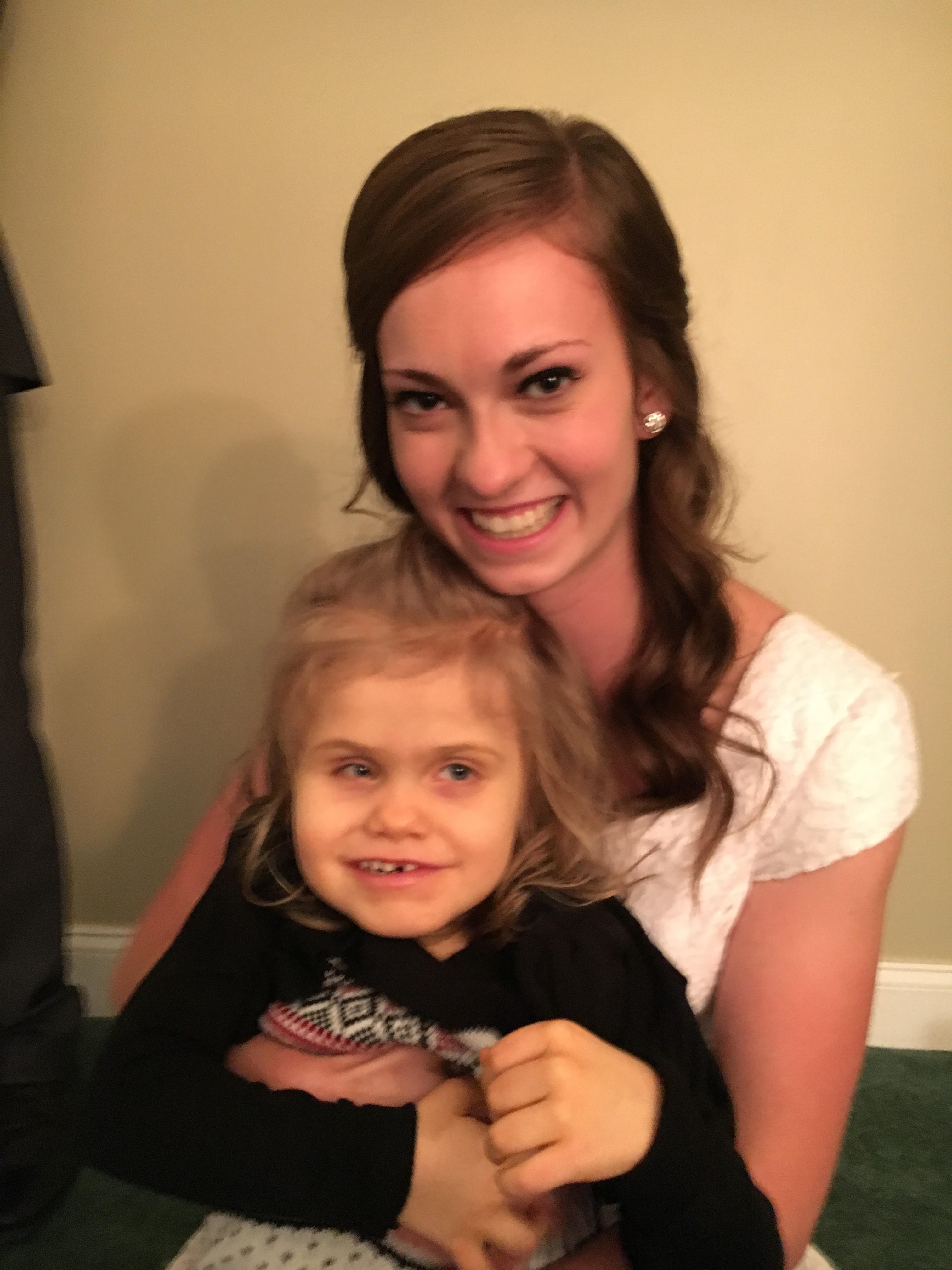
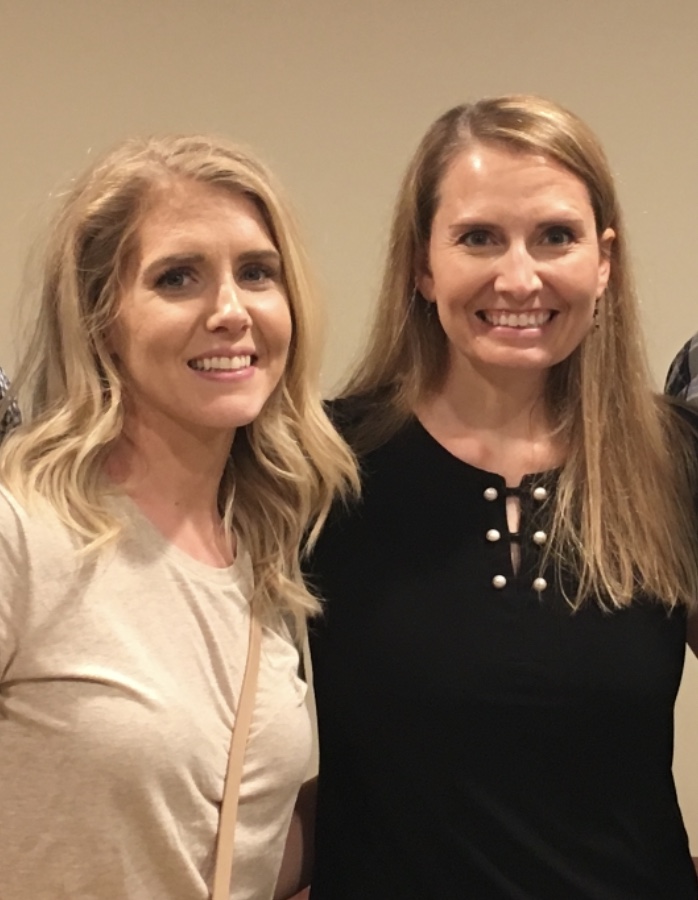
These are the extraordinary women who have come into my home and treated the Girl in Charge like one of their own. I am forever in their debt.

But knowing there are still those in positions of authority who believe children with disabilities should be institutionalized is, at best, baffling to me, and at worst, horrifying. This knowledge has driven me to re-educate myself about the history of disability in this country and I have been reminded in the most sobering way that if our daughter had been born 100 years ago, her life, and ours, would look very different.

Throughout most of history, people with disabilities lived on the margins of society. They were most often destitute, begging on the streets or wasting away in poor houses. Social reformers in the mid 19th century began to believe that with some education, children with disabilities could grow to contribute to society in a positive way. Training schools were opened to offer pupils advancement in motor and sensory skills, basic academic education, and lessons in self-sufficiency. The goal was to prepare students to return home and interact in a positive way with the rest of society. For those with mild disabilities, these schools proved to be a great success, giving families hope and assistance for the first time. And as word spread, more and more training schools opened around the country.

But with the economic downturn in the late 1850’s and the outbreak of the Civil War, focus on training children with disabilities diminished. These children began to be seen by society as a financial burden, rather than a population that needed to be helped. The educational focus of the training schools quickly turned into a custodial one. Parents were told there was little that could be done for their children, and it was best to place them in these institutions where at least their physical needs could be met. Because it was difficult for physicians to tell the difference between mental illness and developmental disability, these two populations were often intermixed within the same facility. They were called “asylums,” meaning “secure retreat,” and the residents were now referred to as “inmates” rather than “pupils.”

It didn’t take long for the expense of such institutions to drain available public funds. Efforts were made to economize and to make the institutions more self-sufficient. Despite their limited resources, many facilities attempted to maintain their integrity as places of compassionate care. But over time, most were not successful.

In some locations, higher functioning children were used as free labor to work in laundries and farms. But as overcrowding increased, supplies still ran low and children within these institutions suffered from neglect. Stories were told about children sleeping on floors, rarely being bathed, seldom going outside, having inadequate nutrition, and spending almost every day in the same room.

Many children also lived in daily fear of their caretakers. Overworked and underpaid, it was not uncommon for members of staff to take out their frustrations on the children, abusing them both verbally and physically, and, in some cases, sexually. Visits from family members were discouraged and at times, outright denied. There was little oversight, and what went on inside the institutions became shrouded in secrecy.

Segregating those who were different was common practice in society during this time. Unless a family was wealthy enough to care for a disabled child at home in private, parents were pressured to place their children in these institutions- physicians and government officials insisting it was the best place for them. These placements became standard practice by the late 1800’s and continued for many decades into the 20th century. Many children grew up in institutions, never knowing the love of a family.

In the 1920’s, reform movements began to form in small disorganized groups around the country. A few educators noticed that some of their mildly disabled students benefited from one-on-one attention, and the seeds for special education began to be planted.

Some parents of children with disabilities, traumatized by the separation, began to organize in hopes of supporting each other. Many wanted to bring their children back home, but their biggest hurdle was the lack of community services and their inability to financial meet their children’s medical and educational requirements. All state funding at this time went directly to the institutions.

Another roadblock parents ran into was the misconception that they themselves were responsible for their children’s disability. It was a common belief that children were born disabled because of the moral failings of their parents. The concerns and wishes of parents were rarely taken seriously and doctors continued to encourage institutionalization.

An unexpected breakthrough came during WWII when many of the male members of staff at these institutions were drafted into the war. In some cases they were replaced by conscientious objectors, who subsequently conscientiously objected to the conditions they discovered inside these state run facilities. They were outspoken, and were able, for the first time, to raise public awareness about the circumstances in which these children were living. After being invisible for decades, the plight of the disabled child was finally the focus of public attention again.

After the war ended and the United States began to enjoy an economic boom, people were able to refocus on social reform. Parents began to organize with new fervor and demand better services for their children. Many of them started their own services in their homes and neighborhoods, but they still lacked funding and support from society at large.

Two courageous mothers made a huge impact on public opinion during the 1950’s when they published books about their disabled children. One was Pearl Buck, the Pulitzer and Nobel Prize winning author of The Good Earth. And the other was Dale Evans, the wife of American singer Roy Rogers. Public opinion swayed against state run institutions in response to these books, and funding for parent organizations began to pour in from private donors. More and more parents formed their own organizations and demanded better services for their children. By the end of the 1950’s, national parent organizations were gaining strength and lawsuits were being filed to force states to recognize the rights of disabled children.

During this time, politicians began getting involved and making public statements in support of disability rights. Governor Youngdahl of Minnesota said, “… the retarded child is a human being…. He has the same rights that children everywhere have. He has the same right to happpiness, the same right to play, the right to companionship, the right to be respected, the right to develop to the fullest extent within his capacities, and the right to love and affection….” These words took the world by storm. Nothing like it had ever been said about a disabled child, and for the first time, some of the prejudice against children with disabilities and their parents began to wane.

President John F. Kennedy further bolstered the movement when he spoke publicly for the first time about his disabled sister, Rosemary. Another sister, Eunice Kennedy Shriver, wrote an article about Rosemary that appeared in the Saturday Evening Post, which further alleviated some of the shame and stigma surrounding having a disabled family member.

President Kennedy took it one step further when he organized the “President’s Panel on Mental Retardation” which, after much research, wrote a report that led to new legislation that authorized funding for extensive research on the diagnosis, treatment, and education of children with disabilities. For the first time the federal government had gotten involved in finding solutions for the challenges faced by disabled children and their parents.

Over the next decade, the movement continued to gain steam, and in 1975, the United Nations signed the “United Nations Declaration on the Rights of Disabled Persons,” which inspired laws that would eventually be passed in many countries around the world.

But despite the progress made on the national and international scene, many children still lived in institutions. The national attention hadn’t trickled down to substantive change for individual families. Community services and mainstream education were still not available for most disabled children. And many in authority insisted that because of better funding and efforts at reform within these institutions, they were still the best place for these children to be.

But in 1973, an organization called the Children’s Defense Fund, noticed that 750,000 children appeared on the U.S. Census as not attending school. Upon further research, it was discovered that these children were disabled and were not being educated by the public school system. The Pennsylvania Association for Retarded Children used this data in their lawsuit against the U.S. Department of Education. The Federal District Court ruled in favor of the children, which led to the passing of federal law mandating that all children, regardless of ability, should be educated by the public school system- something that had never been possible for children living in institutions.
Over the next fifteen years, this legislation led to even more congressional acts being passed that protected the rights of children with disabilities. Thanks to the Katie Beckett Medicaid Waiver, as well as other legislation, parents were finally given the choice to keep their children at home and seek newly established community services for their support, rather than place them in state run institutions. More and more of these institutions began to close- a process that continued well into the 1990’s.

In the end, more than twenty congressional acts were passed in consequence of lawsuits filed by parent organizations before President George Bush finally signed into law the Americans with Disabilities Act (ADA) and the Individuals with Disabilities Education Act (IDEA) in 1990.

This history is humbling and awe inspiring to me. I can’t imagine the heart ache parents went through for generations as they fought against a system that denied them and their children their basic constitutional rights. Knowing that there are still people in positions of authority today who believe children with disabilities should be institutionalized, is unbelievable to me.

The thought of placing the Girl in Charge in an institution is the stuff of my nightmares. Imagining that we might never have known the sound of her giggles when her dad comes home, or how it feels when she throws her arms around you and gives you a million-dollar hug, or the way she sings musical scales in her bedroom at 2 am, or how she wiggles her little bottom back-and-forth when she’s frustrated, or the way she squeals with joy when she’s about to get into the bathtub, or how she puckers her lips when you go in for a kiss, or the way she collapses in on herself when you tickle her and does that little growly giggle…. Imagining a life without all of her unique beauty and joy is absolutely devastating to me. All of that would be gone if she was in an institution. In fact, none of that would have developed in the first place because children in institutions do not thrive. Period.

Knowing that thousands upon thousands of parents before me never knew the joy of their disabled child, is soul crushing. Not to mention the rampant neglect their children endured in their absence. It is unthinkable. Those are the parents I have been mindful of this week- the ones who didn’t have state funded in-home respite care. Those are the parents who suffered beyond anything I can imagine.

But those are also the parents who changed the world.

From the darkest corners of their agony, they rose up and fought. They are the giants on whose shoulders I stand. And to the day I die, I will be profoundly grateful that because of their determination, hard work, and sacrifice, each night I get to go into the quiet, peaceful bedroom of the Girl in Charge, kiss her gently on the cheek, and tell her how much I love her. It is a privilege so many of them were denied.

The words Thank You are so inadequate. But they are all I have. To all those who fought for my daughter’s right to get an education and live at home with her family, from the bottom of my heart, Thank You. I owe you everything.


Sources and Additional Information:

Children with disabilities: Deprivation of liberty in the name of care and treatment

Parallels in Time: A history of developmental disability

The History of the Americans with Disabilities Act

Disabled Kids Living Isolated Lives in Institutions

A World Without Down Syndrome Babies

27 Years After the Americans with Disabilities Act, Has the Nation Kept Its Promise of Equality?

Video: One State’s history of their Public Institutions


The Day That Changed My Life Forever

I need to tell you about September 14, 2011. It’s the day that changed my life forever.

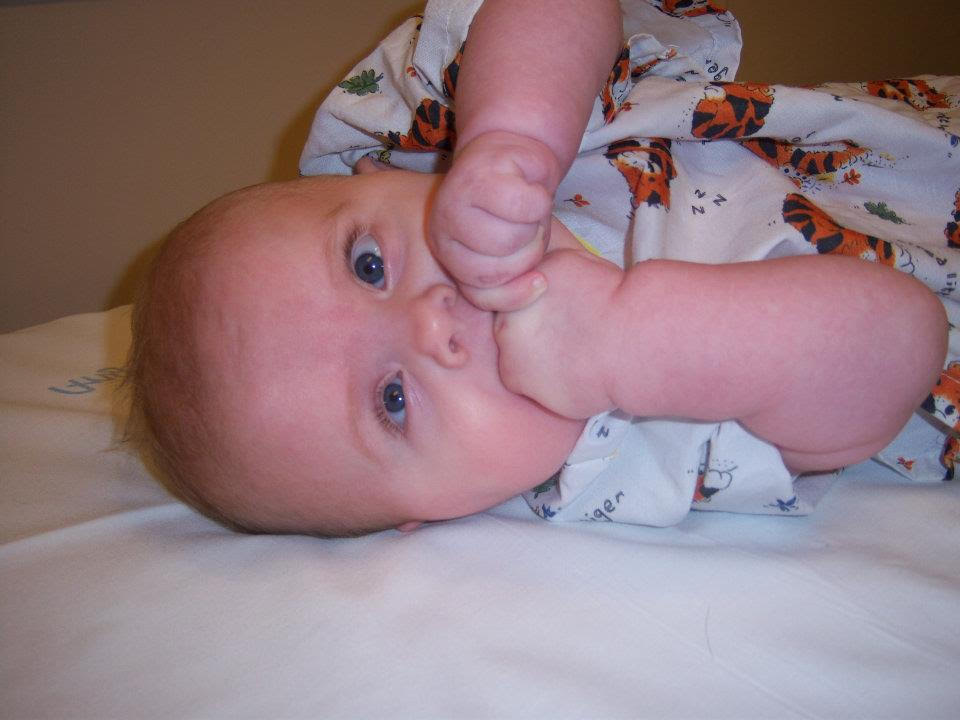
When the Girl in Charge was about 2 months old, we started noticing something different about her eyes. Up until that point, we thought she was a completely normal child. But when her eyes started opening up more fully, one of them didn’t seem to want to open all the way. It was a bit smaller than the other one. Finally, at her 3 month check up, I mentioned it to the doctor and she said she didn’t think there was anything wrong, but “why don’t you get it checked out, just in case.”

So, she sent us to a pediatric ophthalmologist. I still remember that the appointment was set for September 14th at 10:30 a.m. (funny the details that still stick out all these years later). The crazy thing is that I almost didn’t go to the appointment. The Girl in Charge was my 3rd child, and to be honest, I kind of felt like a pro. I didn’t freak out about every little thing like I had with My Mini Me. My in-laws were in town and My Mini Me and My Mini Man, who were 4 and 2 at the time, were excited to spend time with their grandparents, and the entire thing (the appointment) felt like a complete inconvenience.

Several days before the appointment, I even had the thought that maybe I would call and cancel. I was POSITIVE there wasn’t anything wrong. It was just one of those little cosmetic abnormalities that would give her face character. At least that’s what I kept telling myself. But I forgot to cancel the appointment, and by the time I remembered about it again, it was too late to back out without getting charged the cancelation fee.

So, I reluctantly planned the appointment into that day’s events. We were going to go do something fun afterward and I didn’t want to drive all the way home to get my big kids and my mother-in-law when I was through, so they all came with me.

I had everyone sit in the waiting room while I took the Girl in Charge back to the exam room. We did the whole routine where the doctor does the initial exam, then the eyes are dilated, and then we wait half an hour, then we go back in and he examines them again. Internal eye appointments are long (I didn’t know it at the time, but this was the first of many such exams), so you just take a deep breath and get through it. At this point, I was still focused on our fun outing (funny… now I don’t even remember what our plans were… because we never went), and I just wanted the doctor to hurry up and get us out of there.

So, finally, the doctor finished jotting down his notes and scooted his little roller chair up close. I expected him to say, “Well, I don’t see anything wrong. Her eyes just have a unique shape. Have a great day!” But that is not what happened. Instead, he just looked at me for a minute. I waited, not at all worried. Finally, he spoke, but his words were very hesitant.

“Have you been to see any other physicians? Any other specialists?”

I said, “No.”

He said, “No other doctor has told you there’s… anything wrong with your daughter?”

I said, “No.”

He was silent for a few minutes, and then spoke softly. “I’m not usually the doctor who breaks the bad news. I… I tend to be further down the list than this.”

I said, “What do you mean?” … still not feeling worried. Just curious. Again, I was so confident there was nothing wrong.

He said, “Well, I… I feel awful to have to tell you this, but your daughter can’t see.”

It’s difficult to explain how it felt hearing those words. It took a few beats for my feelings of impatience to fall away and for my new feelings to surface. But it’s hard to explain what those new feelings were. It was a mix between curiosity and disbelief. Like… he couldn’t possibly have said what I’d heard, so I just needed to get clarification.

“What do you mean? Like she’s blind?” I asked.

He kind of toggled his head back and forth lightly, still hesitant. Looking back, I really think the doctor handled it like a champ. I worked with him for many months after this, and he ended up being just an absolute star of a doctor. He had the best bedside manner and was so supportive. But at this point, we were new acquaintances. “I don’t know that I would say blind,” he emphasized the word. “Perhaps… all but blind.”

Those are the words I have remembered all these years. “All but blind.”

And that’s when my curious disbelief turned to shock. I felt my throat start swelling and my eyes start burning, but I pushed through. I started asking questions like a … you know… one of those tennis ball machines that spits the balls out in a steady rhythm no matter how bad the person is at hitting them back. I think the doctor could barely keep up with me. I kept telling myself, “Don’t fall apart, Susannah. Whatever you do, do not fall apart. Now is the time to get answers,” so I just kept spitting out the questions. I addressed every detail I could think of. And every answer he gave that was even mildly ambiguous, I would seek clarification. I heard phrases like “her retinas have holes in them” and “her optic nerves aren’t aligned correctly.” But I just kept asking for clarification, over and over and over again, until I finally sat there looking at him, with nothing else to say.

After a moment, he followed up with, “I will tell you… I have a feeling that this isn’t the only problem you’re going to discover. My gut tells me that… well… that she has a lot of other challenges ahead of her.” And then he gave me a long list of specialists I would need to contact.

(I later learned that in the original medical report the ophthalmologist – who, again, was the very first specialist to examine her- sent over to her team of geneticists, he put a note at the bottom of the report. It said, “I suspect Charge Syndrome.” It took that team of geneticists 3 more months of pouring over their own results and the results from countless other specialists – neurologists, cardiologists, ENT’s, audiologists, etc. – before they were able to determine definitively that that ophthalmologist’s hunch had been spot on. I remember being really impressed that he’d suspected Charge from the beginning, even though it’s such a rare syndrome. We’ve been blessed with such amazing physicians all along the way.)

And at that, I had nothing more to say. I didn’t know what I could say. Other than, “Well… thank you.” And I gathered our things and walked out.

That’s when it got hard. When I walked down the hallway toward the waiting room, everything was spinning. My mother-in-law, who was so patient to be entertaining my big kids all that time, smiled at me, and said, “All set?” And I must have mumbled, “Yep,” or something like that. We put the Girl in Charge back in her stroller and walked everyone out the door.

We were waiting for the elevator when my MIL asked innocently, “So, what did the doctor say?” I took a deep breath and said, “He said…” but that was all I could manage. I couldn’t talk around the lump in my throat. I just looked at her, trying to think how I was going to tell her. And then I completely fell apart. I started sobbing. Just… total annihilation. I was standing outside an elevator in a medical office building, with people coming and going, with My Mini Me and My Mini Man looking up at me with concern and confusion, and I was absolutely sobbing. My MIL guided me over to a bench and she put her arms around me and kept telling me, “It’s okay. It’s going to be okay.” And she didn’t even know what was wrong yet. But she just kept saying, “It’s okay. It’s going to be okay.”

Finally, the words formed in my mouth and I was able to tell her the doctor said she was blind. “Not blind, but all but blind,” I said.

It’s interesting how the color fades out of life. Driving to the appointment, we were excited about our day. The sun was shining. The weather was beautiful. The palm trees were vibrant and green. But the drive home was gray. The kids didn’t understand why we were going home, rather than on our outing. The trees were colorless. The ocean wasn’t blue. The sun was dull.

I remember catching sight of my MIL in the rearview mirror. She was sitting in the back next to the Girl in Charge, just looking down at this little 4 month old in her car seat. She was holding her finger out, so her baby granddaughter’s little fingers could wrap around hers. Something she had done countless times, but now it must have held so much more meaning. I could tell, as she looked down at her granddaughter, that she was trying so hard not to cry. I think she was scared- not for the Girl in Charge- but for us. But by then I was done crying (at least for that day). All my tears were gone. I just felt numb.

Besides the phone call I made to my husband, who was out of town for work, I can’t remember what happened between that moment and about 4 hours later. I think I walked around the house in a daze, doing the bare minimum to meet the needs of my children. It was around dinner time that I found myself alone for the first time since hearing the devastating news. My in-laws were in their room, My Mini Me and My Mini Man were playing in the backyard, and the Girl in Charge was sleeping in her Pack N Play on the other side of the family room. I was standing in the kitchen thinking about all the to-do’s on my list. I had at least half the list of doctors appointments I still had to make and my children still needed dinner. But I couldn’t bring myself to do any of it. I was just standing there. Frozen. Paralyzed with grief.

Up until that point, I hadn’t thought much about God’s part in all of this. I was just existing, the shock having hijacked my mental state. But for the first time that day, as I stood there, I started thinking about my relationship with God. Part of me wanted an explanation. I wanted to say, “Why didn’t you tell me? How come you didn’t tell me this was going to happen?” Like I had somehow been betrayed by Him. But those words never formulated in my mind. Instead, the words that came were simple and desperate, “What am I going to do? How am I going to care for a child who is blind?”

And that’s when the heavens literally parted.

I think God was just waiting for me to turn to Him. Because as soon as I did, he gave me an experience that I will never forget for the rest of my life.

As I stood there, I physically felt God’s presence come over me. I experienced a level of peace so complete that it defied understanding. Peace. Pure, undeniable, indescribable, all consuming peace. It is a moment I will never forget. If I had ever wondered if God knew me, was aware of me, loved me, up to that point in my life, all my doubts were gone. God was real. And everything truly was going to be okay.

And then He started to tell me things. Not in words. But pure knowledge flowed into my mind. I knew that this wasn’t a mistake. I knew that this was all part of God’s plan for me. He even told me that I had agreed to it. And that the Girl in Charge had agreed to come to earth with a body that didn’t work.

But the most surprising part of all was that what I was feeling didn’t feel new to me. It was almost like God allowed me to have a memory. He didn’t tell me new information, he just unclouded my mind long enough for me to remember what I already knew deep in my soul. I found myself saying in my mind, “Oh, yah! I remember this. I knew this… once. But forgot….”

And then the feeling faded away and I was back in my kitchen with all my to-do’s and dinner still waiting to be made.

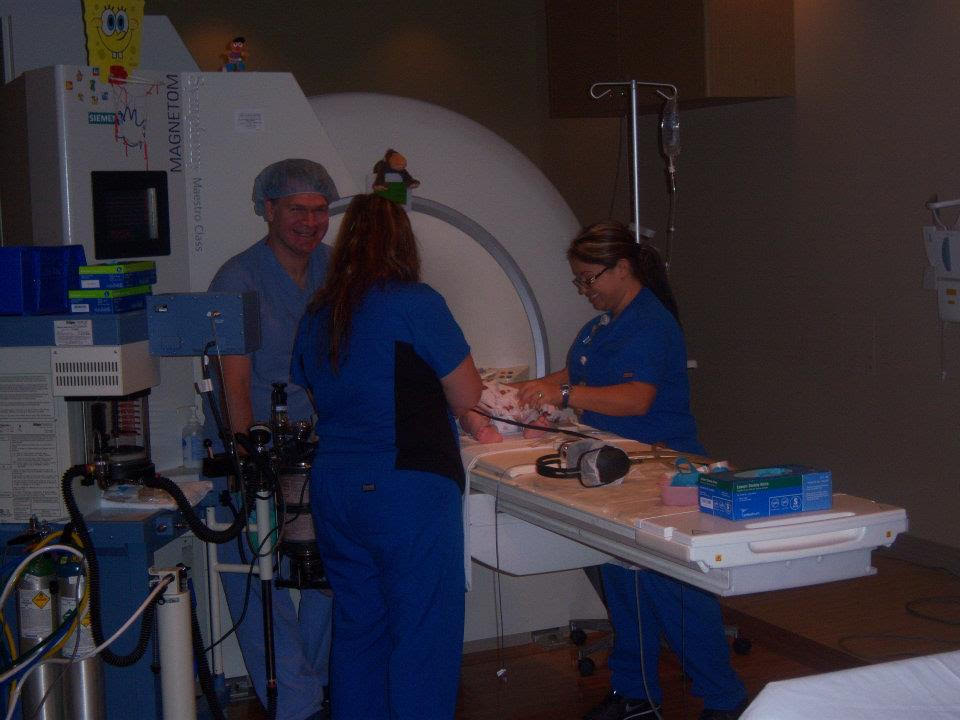
And so it began. For the next three months, we took the Girl in Charge to more specialists than I can remember. And all we got from each of them was more bad news. She was also deaf in one ear and hearing impaired in the other. She also had facial palsy and a narrow nasal passage. Her proprioceptive sense did not exist, nor did her vestibular system. She also had cranial malformations and irregular inner ear canals. And the list went on. Ultimately, in December of that year, we finally got the official diagnosis: Charge Syndrome. And with it, we were told we should expect a lifetime of multi-sensory impairment and over-all developmental delay. Our lives would literally never be the same.

And they haven’t been.

My feelings about having a disabled child have gone up and down over the years. Some days I think she is the most amazing thing God ever created and her existence has given me such purpose and direction in life. On those days, it’s easy to remember that amazing spiritual gift I was given on the afternoon I learned she was “all but blind.” On those days, I have no doubt that I am living the life I was always meant to live.

But on other days I don’t feel that way. In fact, on most days I don’t feel that way. On most days it’s really hard walking into her room in the morning, knowing that when I whisper, “Good morning, Sweetheart. How did you sleep last night?” that it will be met with non-stop crying, and that for the next 30 minutes, I’ll be screamed at and kicked. That basically, I will have to wrestle a 7 year old… now an 8 year old… to get her diaper changed, get her dressed, brush her teeth, comb her hair, put her shoes on, and finally her jacket. Some days, I lie in bed after my alarm goes off knowing that that daily routine is waiting for me, and I Just. Don’t. Want. To. Do. It.

In fact, for this very reason, I have pondered that moment of pure spiritual knowledge countless times in the last 8 years. It’s the knowledge that I chose this that is sometimes hard to swallow. Did I really? How could I have? And if I did, what was I thinking?

And what did that moment look like? Did God sit me down and say, “You can have this amazing person in your life, but she’s coming disabled, are you willing to accept that?” Did I go to God and say, “I want a sure thing. Give me whatever trials I need in my life to guarantee that I will be humble enough to make good choices so I can return to live with you?” Did He send me a tiny disc that said, “Your mission, if you choose to accept it…” before it self destructed?

I have no idea. What I also don’t know is this. What did I understand then, (that would cause me to choose such a heavy burden), that I don’t understand now? What have I forgotten? That is the question I have asked myself so many times. What did I understand then with such certainty, that seems to be lost to me now?

If you’re expecting me to share some grand insight, some divine answer I’ve received after years of faithful ‘search, ponder, and pray’ -ing, I’m sorry to disappoint you. Because I’ve got nothin’. At times, the peace I felt that day has resurfaced in powerful ways and sustained me in very dark moments. And for that, I am extremely grateful. But not most days. Most days what I experience is raw, gut wrenching struggle.

I have heard such beautiful words from people all of these years. Words that I genuinely appreciate. “Your family is so blessed to have such an extraordinary spirit in your home.” “Just think of all the amazing things you’re learning that other families aren’t blessed to learn.” “Think of how your Mini Me and Mini Man are growing up to be such empathetic people.” “You are so lucky to have an angel in your presence every day of your life.” “Your home feels so different. You can tell that a celestial being lives here.”

I get it. I’ve heard (and felt, and appreciated) all of it. All of it! In my head, I know all of the right answers. But it doesn’t change the fact that right now, as the Girl in Charge has just turned 8, and I find myself facing the next 50+ years experiencing the same struggle, but with increased intensity as each year goes by, it’s hard to feel comforted by all the kind, well-meaning comments. I can’t lie, if I was given that choice again, I wouldn’t choose this. I wouldn’t.

I would choose vacationing as a family of 5 without having to leave one parent back at the hotel with the Girl in Charge while the big kids and the other parent go to Disney World. I would choose, “Hey, lets go to a movie,” and we all pile in the car 20 minutes before the show starts and race to the theatre. I would choose My Mini Me and My Mini Man complaining to me that their little sister won’t stop annoying them. I would choose the Girl in Charge begging me to take her to the playground after school. I would choose to have to tell her not to eat so many Goldfish Crackers right before dinner. I would choose reminding her for the 1000th time to practice the piano. I would choose having to tell her to slow down on her bike so she doesn’t crash like last time. I would choose to hear her say, at least once in my life, “I love you, Mommy.”

I would choose freedom. I would choose spontaneity. I would choose normalcy. I would choose to have three children who are able.

Now, please don’t misunderstand me, I’m not arguing the validity of what God told me that day. If He said I chose this, then I must have. And I’m confident there was something then that I understood that I don’t now remember. And I trust that one day I’ll be eternally grateful that I agreed to, and then endured, this overwhelming struggle. But today? Today is not that day. Today, I love the Girl in Charge with more intensity than I could possible put into words. But I still wish things could be different. I still wish with all of my heart that she could be normal. I still wish that September 14, 2011 had not been the day that changed my life forever.


Eight

Today… the Girl is in Charge…

Eight.

She’s turning eight.

The weight of that is hitting me. It means so many things, and yet it means nothing.

I’ve started blogs before. Blogs that didn’t last very long. The first one was – “Look at all the fun things our family is doing!” The second one was – “This is me feeling inadequate, but I’m still going to try to share my faith.”

But I need this blog to be different. I didn’t continue the other blogs for several reasons. Exhaustion. Convinced that nobody cared. Who was I to write a blog? Writer’s block. Depression. Yes, I said it out loud. Depression. Overwhelmed with everything else I had going on. Etc.

But as the Girl in Charge is about to turn eight, I think I’ve finally reached the point where I need to be honest with my friends and family about something.

This is hard.

This is really, really hard.

I’m a member of the Church of Jesus Christ of Latter-day Saints. And in our faith, turning eight years old is a big deal. That’s when a child gets baptized. That’s when, we believe, a child is old enough to be accountable for her choices. That’s when a child is ready to choose to follow Jesus Christ.

Does every child understand the commitment they are making? No, of course not. Do some children do it simply because their parents and peers expect it of them? Yes, of course. But I have found for most Latter-day Saint children I know, that this really is a very special time for them. It’s the beginning of their own journey of faith. And they really do feel the holiness of the occasion. And they really do come to know God better.

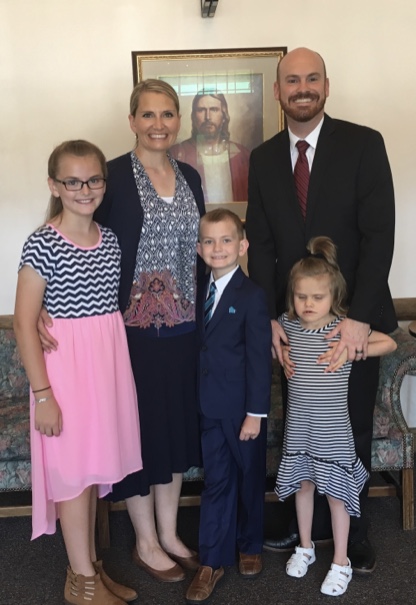
I experienced this with both of my older children, who I will refer to as My Mini Me and My Mini Man. Their baptism days were days I will never forget. Days where I could feel God’s presence in our lives in a very real, tangible way.

But the Girl in Charge? She won’t have a baptism day.

The truth is I don’t really care. I’m not sad about her not getting baptized. I’m completely at peace about that part of it. A child needs to be able to understand what she is doing when she chooses to be baptized. The Girl in Charge does not. AND a child needs to know not to inhale when her face is submerged in water so she doesn’t drown! The Girl in Charge also does not understand that.

So, I’m at peace with it. I really am. God will take care of all of that in His own time. But what I’m not at peace with is the reason why she’s not getting baptized. And what that reason means for my future. (Yes, my future. Selfishly, I’m concerned about me. I’m not worried about her future at all. She will be taken care of. It’s me. My emotional state that I wrestle with.)

You see, The Girl in Charge has… well… Charge Syndrome. She is, quite literally, the Girl in Charge. Hence her pseudonym and the name of my blog.

I wish I was in charge- a woman in charge of her own life, of her own destiny. But my daughter’s condition has made that really difficult. I know that for the rest of my life (for the rest of her life), her needs will dictate my choices- in fact, the choices of our entire family.

This has already happened in some very painful ways. The two that have been the most difficult to grapple with are 1) when my husband was offered a really incredible job overseas, something we were hoping would happen for a really long time. It was the opportunity of a lifetime. But upon researching educational and disability services for our children, we realized that the host country did not have the services the Girl in Charge needed. My husband had to rescind his acceptance of the position and it was devastating.

And 2) we uprooted our family and moved to a different town in the middle of a school year because the Girl in Charge had gotten too heavy to carry up and down the stairs. We looked and looked for the right house that wouldn’t disrupt life for our older children, but we just couldn’t find what we needed in our price range in our school boundaries. And then in the middle of winter, at the worst possible time of the year, we found the right house, but it required moving 30 minutes away from everything our children knew and loved.

It is safe to say that everything in our lives would be different if it weren’t for our youngest daughter. Her needs really do take charge. And at times, it is bitter. For all of us.

This is the part in my old blog where I would say, “But it’s okay, because I know God loves me and He’s really the one who is in charge, and I know this is for my good and everything is going to be okay.”

All of which I believe. But I’m not going to say it this time. Because that’s not what this blog is about. This blog is about me finally being honest. “Hi, my name is Susannah, I’m the mother of a severely disabled child, and it is really really really really hard. The end.”

I haven’t meant to be dishonest about how hard this is for me. I think subconsciously, it was easier for me to deal with the hard stuff if I didn’t let other people see it. But I just can’t do that anymore. Because the older she gets, the harder she gets. This is a burden I cant carry alone anymore. I need to let you all see me, the real me. Not the me who appears to have it all together and make it look easy. But the me who feels the weight of this trial so keenly that some days I feel like it’s going to crush me.

But as is her habit, just when I feel the burden of her care the heaviest, she does something that bursts my heart open with pure joy. Her dad was out of town last week, and this was how she greeted him upon his return.

Hello Daddio!

There she is. That’s my girl. And she is the Girl in Charge.